Thursday, 7 August 2008

After 7 months…

I have mixed feeling about where I am now. I probably improved quite a lot in the capacity to use the camera, compose pictures and think about stories. I feel much strongly that pictures must have a purpose. I feel I am much more conscious of what I am shooting and about the choices I make when composing the pictures. I sometime hear the voice of Paul of Homer when pushing the shutter button (“think about the frame!”, “why are you tilting the image?”) which is somehow scary!

But on the other side, being exposed to a previously unknown world of photography and to the great shots of my course colleagues makes me feel that - whatever progress I have made – it is ridiculously little compared what I still need to do.

The photography bookshelves are evidence of how many new things I discovered! From next to nothing to two full large bookshelves. Of course having a book does not mean to know it or to remember its content. I had my embarrassing moments (like, in the same conversation, telling to a friend that I had no idea of Nachtwey was… and then how much I had liked a big black book called “inferno”…). It was good to do have repeated chances to visit London, because photography bookshops in Roma are virtually non existent and have a very limited selection. Italy is certainly not London when it comes to photography, but I am making now a more conscious effort to discover places where to hang around, as there are a few hidden gems. I am yet to visit the gallery of Noor, recently discovered, and the Contrasto space in Milano, for example.

The lectures were really good, and I want to revisit them systematically (so I badly need the archive to work!). We looked at an impressive list of photographers. Some of them really made a strong impression on me. But when looking back at the list, I sometimes find names that sound new to me! I do not know if it is because they did not strike me or because I just was overloaded... As soon as archives will be on line, I plan to do “a photographer a day”: I should listen again to the lecture and make some additional research on the internet to look at more pictures.

I squeezed the Master in between a demanding work schedule. Being overworked did not help. When working 150% of my time, piling up a master on top is really a lot. The fact that I managed to complete all assignments and assessments on time, and that I was able to - more or less - keep the pace of the classes was a true sign of how much I enjoy the course and I am committed to this. Of course the price to pay for this is that I did not have enough time to absorb the teaching, to really spend the extra time after each class and on each assessment to go deeper in it. In some cases the travelling schedule made it impossible or me to access the tutorial which was a big loss. Lack of time and lot of travelling also means that I – as usual – take tons of pics in a place and I have next to zero time to look back at them and really think what to do with them. Actually one of my problems is that I am exposed to so many stories to the point that I have an embarrassment of the riches when it comes to choice.. but zero time to then work on any of them.

Of course I am now more conscious that I SHOULD tell stories, but in most cases the only “stories” I end up telling are dull stories of a development project, and of the methodology about it... Which is probably fine, given where I work, but not really exciting… But nevertheless I feel I made progress on this and started to influence some colleagues on how pictures and visual analysis could be used to improve our work and understanding.

Actually the master was one of the factors in my decision not to renew the contract with ActionAid (which will expire end of October). I know that, if I am really serious about it, I need of more time for photography outside work. And I also know that - loving my work so much - I would never had managed to free that time available if I continued with the contract. So I took this brave decision. Starting from November I will have to reinvent my life. Of course there is the risk that - having to look for shorter term jobs (consultancies, freelancing and the like) – I will end up with less time than before! But what I hope is that, by forcing myself to chose where to engage, I can devote more consciously time to photography, and maybe I can seek for engagements where photography has a more important part than it has now.

I feel that I should improve a lot on the technical side. I was lucky enough to be supported by a colleague in the communication department which accompanied me in photo walks and criticized my work. This was extremely useful, and really pushed me out of my comfort zone (=the “P” setting of the Nikon and my zoom lenses!). I tried out different camera settings, I started to work with different lenses and I am now working with foxed focal quite a lot, which I never did in the past. I bought myself a flash and next step is to try to play with it.

I wish there was a way to do more of this technical counselling within the course. I understand it is not easy to organize this when we are all over the places. But it would be good for example, to have a residential week of photography somewhere. It would be great to do this within the course… but if this is not possible, maybe the course should present alternative options for that where small groups could engage together in some external initiative.

I need to work on the technical side more, when I shoot (being more in control of how I chose to take that picture in terms of settings / lenses / light..) but also after, on my laptop. In a way I take so many pics that post production work really is not on my radar, and it should be. Despite being a bit of a computer geek, I did not invest enough time to be a serious user of software and to learn what is really the best way to process a picture. Now I play with some basic parameters, but a bit randomly really… Again, it would be good to tackle this in the course.

Probably a lot more to tell… but this is what comes to mind now…

Monday, 28 July 2008

Assessment 1. Written essay.


‘If your pics aren’t close enough
they’re not good enough’


If one reads this quote having the personal history of Robert Capa in mind, meaning and implications seems quite straightforward: you need to be where the action is, you need to be physically close, and you will get a good picture.
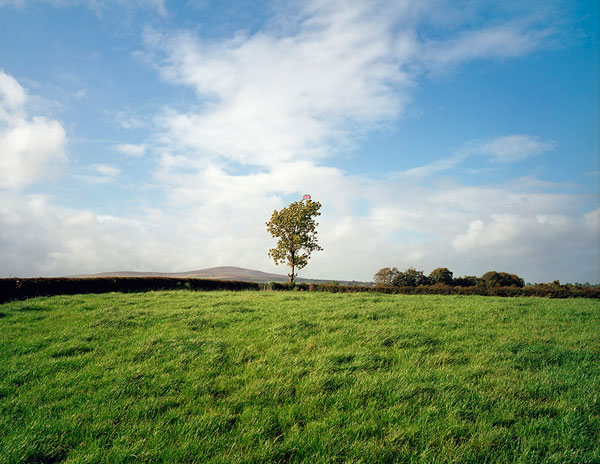
So, the first obvious approach is to challenge this dictum by investigating the relationship of “close physical proximity” and “good pictures”. The pictures of Paul Graham - broad landscapes, near absence of action, where only small, far away details suggest the presence of conflict - could be used to contrast this view: a distant viewpoint can also reveal a lot about conflict and lead to good pictures. But this essay will not focus on this angle only. The point of departure of this essay is to accept that by milling on this quote, further questions are unavoidable. What constitutes a “good” war picture? What does “close” really mean? Close to whom, close to what? In a time of changing warfare, where is the battleground, anyway, and where is war felt?
This essay will not focus so much on replying to these questions. It rather argues the importance to ask them. The very act of asking can result – as this essay will show - in different approaches to war photography, different viewpoints and aesthetics. All of these are very relevant in trying to capture the complexity of warfare and its ripple effects at the present day.


“good” = “close”?

A war picture - being originated in a context that is so loaded with meaning and ethical dilemmas - cannot be judged based on its aesthetic only. Actually the very debate on the legitimacy of aesteticizing suffering and conflict has been an underlying question for many years, and a fil-rouge in the influential criticism of Sontag [Sontag 1977, 2003]
Whatever the positioning on that debate, it is probably safe to say that judgement on the quality of “good” war photography transcends the mere aesthetics, and need to consider its value as testimony.
Testimony is related to the concept of proximity and closeness: it is about being there, physically. It is about being in a place where most people would not want to be, and to witness.
The value of this closeness is demonstrated, in the competitive photographic market, by the premium attached to it, which - however - also came bundled with risk. “It is left to the people on the ground to decide what is worth the risk and what is not. I leave it to your imagination what t happens is you say to your boss than an assignment is too risky, and your competitor gets the picture (Mathias Eick, war correspondent, quoted in Moeller, 1999: 19)

But - as demonstrated by Graham - there is a value in breaking this unwritten rule of the primacy of closeness: understanding war sometimes requires a broader perspective, and distance. Stepping back to look at the context, or at the details at the margin of action, can actually give new perspectives to war.
Norfolk raised the bar even further by distancing himself also in time, when taking pictures in the land of forgotten conflicts, such as Armenia or Namibia. Again, distance adds meaning: “What these photographs tell us is that even infamy is subject to entropic decay. Even large and terrible crimes are eventually forgotten […]. This is hard to bear. We do no want to live in a world where crime escapes punishment […] [Ignatieff in Norfolk 1998: no page]


How close a photographer will want to be?

There are questions about the legitimacy of being so close to suffering and portraying it, and different photographers will have a different take to it. This is where physical closeness and emotional closeness start to interplay. There is the gung-ho, adrenaline pumping desire of proximity of the stereotype war photographer, but there are also forms of proximity that are declaredly accompanied by detachment, or by the deep desire to be elsewhere. So, physical proximity interplays in different ways with the emotions and the standing of the photographer. This has certainly a role in the way a picture is composed, and in its purpose. Nachtwey affirmed “Every minute I was there, I wanted to flee. I did not want to see this” [WarPhotographer 2001. He then grounded his decision to stay in the value of testimony.

Linked to any judgement of the opportunity of closeness there is then the decision as to where to position oneself in a war. Close to whom? Taking sides (like Capa in the Spanish war or Griffith in Vietnam)? Attempting to be neutral and see the different facets of conflict? Or simply occupying whatever space is on offer, as it is increasingly happening to “embedded journalists”?
At a time of changing warfare, access as been a casualty and even neutral actors such as journalists or humanitarian workers now find it next to impossible to operate. The very fact of reclaiming a choice of physical proximity becomes a valiant act. “We chose to work unembedded so that we might provide another perspective on this war. And I mean that literally: we sought out a specific physical perspective — not a specific political perspective — outside the American bases and armoured vehicles” [Thorne Anderson in: Komp 2006]


Close to whom? People… emotions…

It would not give justice to Capa to affirm that, for him, closeness was only about physical closeness to action and battle. His pictures of the Spanish Civil war do clearly convey that he was taking sides, that he had empathy, that the people in the pictures and their life really mattered for him.

When it comes to emotional closeness, there are different perspectives: Delahaye affirmed that he can only restore the suffering through detachment [Sullivan 2003] and then caused a stir by emphasizing the aesthetic qualities of his picture of dead Taleban, transformed into art gallery work.
Pellegrin also attempts to operate at a level beyond the “documentary” only, but he does so to bring in, strongly, emotions. Whilst the memorable pictures of Capa of the D-Day where “slightly out of focus” for technical issues, the pictures of Pellegrin are explicitly built in conditions of marginal light, they are blurred to give a sense of not finished which shall lure the viewer closer to them


How close can a viewer be?

If ethics are considered in determining was a good war photograph is, then many would agree that a good picture should bring the viewers close to the war and the suffering, overcoming their “compassion fatigue” [Moeller 1999]. Nachtwey, as many others, had argued that a powerful picture should put people in touch with war, should help people to see what the war does. A picture should “protest, and by the strength of that protest to make others protest” [Natchway 1985]. So, the idea of closeness can be stretched to apply, somehow, also to the viewer.
But there are critics of this attempts to bring suffering close to the people. Sontag affirms that “no one has the right to experience the suffering of others at a distance” [Sontag 2003: 105]. And she makes clear that even good intentions can be defeated as “in a world in which photography is brilliantly at the service of consumerist manipulations, no effect of a photograph of a doleful scene can be taken for granted [ibidem: 71]


Insiders: too close for comfort?

An outsider can see - maybe feel - but never really experience war as these forcefully involved in it do. However close, ultimately s/he will deploy his superior power and stance when capturing an image.
Nowadays images of war are increasingly captured not only by professional outsiders, but also by insiders: those who plan the war, those who fight it, those who experience it. This had happened in the past, but the widespread availability of cameras and channels or dissemination is giving a new dimension to the perspective of insiders. Their (often forced) closeness constitutes a unique view point. The identity of the insider (his/her role, loyalties, power…) will define to a large extent what it is possible - or not possible - to convey. It will also model the meaning that viewers will attribute to these pictures.

The pictures of Ziyah Gafic, for example, tell us about the life of people during the Bosnia war. Insider’s closeness is a fundamental ingredient in creating the intimacy of its work: often the people portrayed are his own relatives and acquaintances.

At the other side of the spectrum there are the pictures taken by the combatants, which sometimes trickle out on web and media. Rather than the anesthetized views of the battle proposed by official war photography, they display the extremely personal and crude perceptions of war as seen by he troops. The site (now closed) www.nowthatsfuckedup.com - which offered porn pictures to the troops in Iraq in exchange for their own picture of combat - was an extraordinary testimony, maybe too close for comfort. The same crude and cruel power deployed by the troops in combat also spilled over into their photography. How would ethical concerns play when judging such photography, if they were beautiful? Could they ever be”good” when they represent hatred and “fucked up” perceptions?
In this case, however, the close-ups of disembodied people, the loveless porn scenes in the barracks were definitely not good pictures. Ricuperati [2006] points out that they lacked a punctum as well as the studium. They lacked intimacy; they portrayed closeness without empathy, anesthetized feelings. He notices that single images have no real visual power per se: they portrait death as ordinary and even boring. It is the sequencing of such pictures, together with the comments of authors and readers, which build up a horrendous picture of war, deprived, as they are, of a “moral justification” and being too close to death and alienation.


Where is the battleground, anyway?

What is the theatre of war photography? Is it the battleground? And where is the battleground, anyway? Starting with the first aerial bombings, and increasingly now, war action can happen in a place and then hit people far away. Norfolk had shown this efficiently by photographing the computer mainframes in military complexes. If a computer can be the battleground, clearly the idea of proximity, in current warfare, will need to be revised.

When searching for closeness, is the battlefield really the centrepoint? Most people “die from war rather than in battle”. It is the civilian population that pays the price of war [Slim 2008:91]. Casualties are found in peripheral areas. People are hit by straying missiles. People flee their land. People lose their support nets. People die of poverty, of famine, of illness ultimately derived from conflicts and war. So, being really close to these affected by war might mean to stir away from the glamorous centre of action, or stay behind when the media circus leave a place.
The “battles” happening in such places are often battles for survival, an attempt to put together the resemblance of normal life. Being close and responsive to these situations might mean to refuse, as Salgado, to portrait people as victims without dignity [Levi Strauss 2007]. It can also mean to capture glimpses of their happiness and “normal life”, reclaimed against all odds – as Lowe in Bosnia.


Conclusions

“If your pictures aren’t close enough they’re not good enough’ proved to be a sentence that could be read in many different ways. Playing with its meaning, this essay argued that different interpretations of closeness and of the concept of “location” of war can lead to many different, somewhat contrasting, perspectives on war photography.

In addition, closeness should not only be judged by the positioning of the photographer. The sense of closeness created in the viewer is equally important in judging the merit of a war photography.
I would discard the idea than only close proximity to action achieves good pictures. I rather believe that it is only by cumulating different angles and interpretations of “closeness” than war and changing warfare can be represented, and that their effects can be brought close to distant - and often too detached - viewers.


References

BLDGBLOG (2006), “War/Photography: An Interview with Simon Norfolk” in BLDGBLOG, http://bldgblog.blogspot.com/2006/11/warphotography-interview-with-simon.html. Accessed 09/07/08.

Bonaventura, P. (2003). “Paul Graham: The troubles” in: CIRCA Online. Available at: http://www.recirca.com/articles/paulgraham.shtml. Accessed 09/07/08.

Komp, C, (2006). “Witness to war. Unembedded photojournalism in Iraq” in Clamor. Available at: http://clamormagazine.org/issues/36/media.php. Accessed 09/07/08.

Levi Strauss (2007). Politica della fotografia. Postmedia, Milano.

Lowe, P. (2005). Bosnians. Saqi books, London.

Magnum website (no date). Paolo Pellegrin Portfolio on Magnum Site. Quote available at http://www.magnumphotos.com/Archive/C.aspx?VP=XSpecific_MAG.PhotographerDetail_VPage&l1=0&pid=2K7O3R13CHLN&nm=Paolo%20Pellegrin. Accessed 09/07/08.

Moeller, S.D (1999). Compassion Fatigue. Routledge, New York and London.

Nachtwey, J (1985). Why Photograph War?. Available at: http://www.war-photographer.com/en/wp_Pressbook_E.pdf. Accessed 09/07/08

Norfolk, S (1998). For most of it I have no words. Dewi Lewis Publishing, Stockport.

Pellegrin, P (2007). Video-interview available at: http://dailymotion.alice.it/Theblogtvcityzen/video/x24xqx_intervista-al-fotoreporter-paolo-pe. Accessed 09/07/08. (translation from Italian by the author)

Ricuperati (2006). Fucked up. BUR, Milano

War Photographer (2001) . Directed by Christian Frei. Switzerland. Christian Frei Filmproductions.

Slim, H (2008). Killing Civilians: Method, Madness, and Morality in War. Columbia Univ. Press, New York.

Sontag, S. (1977). On Photography. Penguin, London. Reprint Penguin Classics 2002.

Sontag, S. (2003). Regarding the Pain of Others. Pengiun, London.

Sullivan, B. (2003). “The real thing: Photograper Luc Delahaye” in: Artnet. Available at: http://www.artnet.com/magazine/features/sullivan/sullivan4-10-03.asp. Accessed 09/07/08.


List of Pictures

1: Robert Capa – Ohama beach – 6 June 1944
Whelan, R (2001). Robert Capa. La Collezione Completa. Phaidon, London.

2: Paul Graham – Union Jack flag in tree, County Tyrone, 1985
Graham, P (no date). “Troubled land” in Paul Graham Archive. Available at: http://www.paulgrahamarchive.com/images/troubledland/TL-01.jpg. Accessed 09/07/08.

3: Luc Delahaye – Dead Taleban
Sullivan, B. (2003). “The real thing: Photographer Luc Delahaye” in: Artnet. Available at: http://www.artnet.com/magazine/features/sullivan/sullivan4-10-03.asp. Accessed 09/07/08.

4: Paolo Pellegrin. Civilians fleeing Basra dusing US-led invasion.
Pellegrin, P (2007). As I was dying. Dewi Lewis Publishing, Stockport. p 12.

5. James Nachtwey. Bosnia, 1993 - Wounded soldier.
Nachtwey, J. (1999). Inferno. Phaidon, New York. Reprinted 2006. p 200.

6: A picture from the website www.nowthatsfuckedup.com
Ricuperati (2006). Fucked up. BUR, Milano. P. 100.

7: Simon Norfolk (no date), “Modelling Physics inside and exploding nuclear warhead.
Norfolk, S (no date). “The supercomputers: ‘I am sorry Dave, I am afraid I cannot do that’” in :Et in Arcadia Ego”. Available at: http://www.simonnorfolk.com/ Accessed 09/07/08

Friday, 18 July 2008

Assessment 1: the electoral campaign of Roberto Tavani


Obama style: door to door.
The electoral campaign of Roberto Tavani.
Municipio XVII Roma


This photographic essay document the electoral campaign of Roberto Tavani,
It was an original campaign, run on a shoestring, pushed by a vision that politics should be closer to the citizens rather than to political parties logics.

Background to the Election.
The Town and Municipal election held in April 2008 came as a surprise. The national government fell in January 2008. The incumbent major of Roma, Walter Veltroni - head of the newly formed Partito Democratico (centre-left) - left his post to run as Prime Minister. Quite unexpectedly, citizens of Roma were summoned to vote for the town administration. Equally unexpectedly Roberto Tavani, a town councillor (Environment, Sport, Culture) in Municipio XVII for Democratic Party had to step down from his role as councillor and run his electoral campaign side by side with his institutional committments.

Municipio XVII
Municipio XVII is located north of the Vatican. It has different souls: close to St Peter is the bourgeois Prati, moving further north there are more popular, middle/working class neighbourhoods. The campaign of Tavani mostly happened in these popular parts, by the local markets, the playgrounds. This is where Rome becomes an interesting mix: a bit of a village – people rooted in the area, talking lively in their strong accent; a bit of a city – large buildings with the imperial allure of fascist social housing.

The campaign
I stumbled in Roberto Tavani by chance. I was lucky because he run his campaign very differently from many. First of all, the “municipio” is the only government body for which electors can still vote a candidate of choice: at all the other levels people vote “blocked” lists of candidates appointed by the parties. So, at this level, personality mattered
Another difference is that many people would rely on billboards, leaflets and basically on lot of money to run their campaign, so the choice of Roberto Tavani to make a low cost campaign and base it on face to face interaction with people was an interesting one. It was a campaign on the road, and I had walked for hours following him in action.
Finally, Roberto Tavani is a bit of an outsider in the Partito Democratico. He feels that politics should change. He believes more in dialogue with citizens than being part of political games. So his campaign only rarely overlapped with what was organized by the party: he preferred to be in the streets rather than in the party offices or in more institutionalized electoral venues and stalls.
Roberto was helped by Lorenza, which worked as a secretary and PR and also accompanied him to talk to people. A couple of boys also volunteered to dispatch door to door electoral material with their scooters, to the supporters requiring it.
Finally, his former responsibilities as town councillor (Culture, Environment, Sport) meant that his campaign revolved around art galleries, theatres, open spaces, gardens: a beautiful backdrop capturing many facets of this part of Roma.

How did the election go?
The democratic party won the election in the Municipio and Roberto Tavani received the highest number of votes in the municipio (over 700 votes, meaning, 1/60 of the voters wrote his name on the ballot out of a choice of 300 candidates). He is again councillor. The democratic party did not equally well in broader Roma, and the candidate of the Right, Gianni Alemanno, won the elections.

About the multimedia project.
The multimedia project presents a different set of pictures from the portfolio. Pictures which would not work in a portfolio became essential here to accompany the narrative of the campaign by Roberto Tavani. The occasion in which the audio clip were recorded was a visit after the elections, when he looked back at the campaign as I gave him the pictures I took. The song “This is not America” was proposed as a soundtrack by Roberto, not only because he likes it. It is also a cheeky remark about the admiration for a dreamlike Kennedy America by the leadership of the Democratic party. The title "Like Obama" came from a joking comment Roberto made while walking around the town.

Thursday, 10 July 2008

Quick (long due) update.


Long time with no updates.
Amongst other travelling, I spent 20 days in north-eastern Kenya, in a remote district inhabited by Somali Pastoralists. I took many many pictures, and to my frustration I see that I did not yet overcame my Africa problem: i.e. I keep on taking pictures that I find somehow cliché and superficial. A friend of mine with whom I shared my frustration said that it is because I am not "in" the photo as in other circumstances, and this might be true...

Anyway, a nice trip, but 20 days with very little electricity (just enough to recharge the batteries of the camera) and next to zero connection (still it is incredible that mobile internet connection can already reach some of the places i visited!) meant a SCARY backlog of work... Couple this with having to move my room and meet the deadline of the course and you will see why I did not post much!
Anyway... Essay 1 has been sent yesterday. I am finishing now the picture essay, which will be the one of Elections in Roma. I took many pics since, but none of this work was really thought as a piece. I will then be able to spend time working on the pictures of North Eastern Kenya. I will need to assmble them for work, to show what methodology we used there through pics, and I might share the outcome with you.
Hopefully I will then be able to play with my new toy, the SB600 flash that just arrived. I have next to zero knowledge of working with flash, so I will do some experimenting. And I am looking forward to get a little bit of time to go back to the wimba archive and revise the lectures we had done so far. Some of the photographers really stuck in my mind, other didn't.. so I want to revise them all.
As they say, a photographer a day...

Tuesday, 13 May 2008

Bangladesh: a B movie in Golachipa


Movies are immensely popular in Bangladesh. The big blockbusters are still the Bollywood movies, but there are also locally produced movies. If you happen to be in a remote city you might catch up with the B movies of Bangladesh: dreadful quality, shown in cinemas with an incredible charme but also incredibly hot... Not for the faint of heart!

Wednesday, 7 May 2008

Bangladesh: Star Circles in Faridpur, Jessore, Sylhet


I spent most of my time in the field talking with the participants of “Star circles” around Bangladesh (in Faridpur, Jessore – west Bangladesh; and in Sylhet – North). Here are a few snapshopts of the participants and of the settings.

Tuesday, 6 May 2008

Bangladesh: Stone Cave at Jaflong


An interesting feature of Bangladesh is lack of stone. By every construction site you will find workers hammering into pieces bricks to make "gravel": real gravel is just too expensive. Also the flat stone for grinding spices that every household has is an expensive item. So when you get to see stone in Bangladesh is an event. These pictures are taken at the border with India (and you can even spot some border police amist the crowd): here the flat fields of bangladesh abruptly hit the hills of Assam. This is where stone gets collected, processed and sent all over the country. As usual I only had minimal time to take pics...

Friday, 2 May 2008

Bangladesh: a brothel in Jessore.


I visited Jessore brothel and met with the prostitutes as part of my work on the “Star” project. Star is a methodology which looks at bringing together groups of people, to discuss issues of concern and mobilize around these. Whilst doing so – participants are also informed about HIV and Sexual health related issues. My work was to check how this methodology is implemented – to learn how to better use it around the work. I also was checking that the issues on which ActionAid campaigns, advocate and lobby at the national and international level are really the issues of concern for the people we work with. In other words: are we speaking about the concerns of the poorest and more marginalised people, or are we making up the agenda?

So I could spend a few hours with the prostitutes, discussing what issues had emerged. Issues include marginalization – until recently prostitutes could not even go out of the brothels;access to sexual care; linkages with national organization of sex workers; child care and education –as prostitutes live in the brothel with babies; support in saving and investing the money. Other issues of concern, like the relationship with the police, could obviously not being discussed, as the police itself was heavily guarding the meeting.

The brothel is a town within the town. You get in through small alleys, barely screened by some curtains. The little roads inside have little shops of shampoo and basic things, and from there you access to multi-storey buildings, where the prostitutes live and work. Each of them rent her room and pays by the day. There is hardly any space to cook, cooking happens on the long corridors / balconies which connect the rooms. A few children play around, and then there are the Babus, the protectors of the prostitutes, which also share the space. They often are the male children of the prostitute, that grow up to protect their mothers and family. It is chaos, a crammed humanity.

From the picture point of view it was of course a tantalising experience. In the brothel, with full access, a trusted presence - thanks to the good work of my colleagues in working with the prostitutes…. But next to zero time to take pictures. Being the foreigner guest, the centre of interest also does not help. I was either discussing with the prostitutes, so my full attention had to go to them… or walking across the buildings, always talking to people, crossing from one space to the other quickly, and hit by so many things and feelings… I could not really take time off to take pictures, only did a few, which of course are just a few snapshot but really do not tell much of a story or capture the sense of place. So, photographically I came out of the brothel with a sense of “I wish I could”. On one side I definitely need to learn how to make better use of the zero time that I have, to really get a quick eye to spot the right things to record and a sense of how to do it successfully despite the crowd. But on the other hand I will have to find way to simply have a little bit more time in my hands when I visit such places.

The pics below are a few snapshot of a little show put on by children in a centre run by Shapla Mothla, the partner organization of ActionAid. The children are sons and daughters of prostitutes, you saw some of their mothers in the pictures above. Children still get too see their mother, but – unlikely many of the other prostitute children, can live outside of the brothel. They shall have a chance to escape the destiny of the many children trapped in the brothels: becoming a prostitute or a Babu.

Bangladesh: on the ferry to Faridpur


Wherever you go in Bangladesh, sooner or later you will be on a ferry. These are a few pics of the journey, focusing on the passengers, the sellers, the beggars.

Monday, 28 April 2008

The Vatican Borders


The "pub discussion" last monday pushed me to do a little more work on borders.
I started to study the borders of the Vatican, by walking around.
It is quite handy to be able to circumnavigate a whole state in less than two hours... including the time to take pics! It is defnitely an interesting subject, which will deserve many more visits and much more time (shame that I am just moving house on the other side of Roma!!!):

1) there are borders that are routinely crossed by tourists (St peter Square, the Vatican Museum), therefore with very permeable "gates", crossed by people of all sort - with very long queues at times).

2) there are borders that are guarded, and open only for those who have permissions. These are the borders to the non-touristy parts of the State of the Vatican, mostly crossed by expensive cars, nuns and priests. And of course the Swiss Guards add interest to these borders.

3) there are long stretches of wall, with no openings, guarded by cameras. Nice houses on the "Italian side", and the Vatican Gardens above.

4) there are spaces by the walls used as parking lots, small gardens, dog areas

5) there are closed gates (with concrete slabs!)

6) there is even a train gate, a very large metal door. I wonder if they open and use it often

7) there are metal detectors in St peter Square, which make the colonnade look relly like a border (it used to be much more open before, but now, as everywhere else, they added lot of security)

And of course there are many different characters hanging around: the informal sellers of bags and glasses scattered all along the tourist areas... thousands of tourists ... nuns and priests... Swiss Guards... italian policemen... residents of the nice neighbourhoods adjacent the walls... and the pope of course.

Definitely lots of potential there. I guess I will have to explore the action happening in different places around the borders. Maybe I should try different styles to suit the different characters of the wall? And of course I better revise some history and urban planning books.

The slideshow contains all the zillions pics I took today, to give an idea of the borders. The strategy was to walk around and gain a sense of the borders. The pics are a bit souless as I did not spend much time to look at interesting actions and relationships. I guess I will have to shortlist some interesting spots and spend more time hanging around these.

Monday, 21 April 2008

Long essay: the electoral campaign of Roberto Tavani


Roberto Tavani, former Environment and Sport councillor, run for re-election at “Municipio XVII” in Roma. His electoral campaign reflected his style: he is committed to bridge the gap in between politics and citizens. He quoted as a mantra the “politica della fontanella” (waterfountain politics, as definied by the leader of the Democratic party Walter Veltroni) which is about a governance style looking at the big ideas without loosing sight of the basic needs of people.

In a Rome full of electoral posters and of all sort of wasteful electoral advertisement, the electoral campaign of Roberto was quite an odd one. No posters, no cars with ads, no tv ads, no big events and a very little money invested. According to him it is a crime to litter Rome, and election time is no excuse to waste so much money. So he printed only a few leaflets (with a “please recycle” logo at the back), and did a lot of walking : “Will you vote in Municipio XVII? If so, I would like to give you a leaflet and introduce myself… “.. and started chatting. Most of his campaign was done on the road, talking to people in the streets, in bars, in shops. He also participated to few events, organized by friends or by himself (e.g. aperitifs, opening of art exhibitions, pub evenings, a theatre show with a comedian…). But he stayed away from big events, from the gazebos of the Democratic party, which were popping everywhere in the neighbourhood. The essence was walking walking walking, with his assistant Lorenza and always in his clark shoes, green coat and cigarettes, the uniform of vintage left wing politicians. He walked mainly in the areas where he had something to show of his previous work (playgrounds, dog areas, pruned trees…) and where he certainly had lots of acquaintances: he remembered the names of an incredible number of people… He walked in the areas more prone to vote to the left: the northern area around Piazza Mazzini rather than the elegant and posh streets of Prati. And, on top of all this walking, he did a lot of talking on the mobile phone.. and a blog, with a small video for You Tube.

The outcome of his approach was a surprising one. The democratic party won the election in the Municipio (quite an achievement in a country where the right got it all this time), and he had the most votes, more then double of the second one. Definitely, at least at the Municipio scale, there are still many people who believe in the having a personal relationship with the candidates they vote for, rather than looking at his face on a poster or on tv I guess it is good news.

Wednesday, 16 April 2008

Short story 2: election garbage

When it is election time in Roma it is impossible not to notice it. Electoral posters have the lion share. The appear everywhere, on authorized boards or…. well, just wherever there is some space. One over the other, and sometimes it is a question of hours, if not minutes before another layer is added. Often the boards collapse under the weight of so much paper. Speed and volume are the essence to control critical areas, such as Piazzale degli Eroi (quite a depressing space but where there is a lot of car traffic)… Efficiency is increased by inventions such “il rullo” (the roll) which apparently only two companies in the area really master.

Interestingly the main culprits of the illegal posting seem to be the candidates of the parties who defend “legality” at all costs, right and extreme right… Many of such candidates do not mind show their face on garbage containers. Other prefer sign posts, phone boxes. Windscreens are also a favourite. And of course, at the end of the day, it is garbage in, and garbage out. Leftovers of the campaign litter the roads of Roma.

Notes on this essay:

1) As with the previous one, this is also an essay describing an environment. I tried to capture - as much as I could people posting posters or distributing leaflets, to have some action. It was not always easy, as some of them are doing this illegally and were not happy to be photographed. The legal workers were happy to discuss their techniques, and, if I had the time, I would have liked to spend some time following one of them in action across the neighbourhood.

2) The interest to look at “election garbage” is also due to the desire to contrast it with the “no posters / no frills” campaign lead by Roberto Tavani. I quite liked the fact that he was the only candidate with a “recycle” sign on if leaflets… and that he hardly ever wasted leaflets. He preferred to hand them in to people he was talking to rather than just distributing them in post boxes.

3) It is fun to look at the message of the posters juxtaposed to the surrounding area. The message “stand up again, Italy” by a bench… the poster of a candidate by a washing powder claiming a supernatural force… I did not play much this game also because this is the traditional newspaper feature: “send up some fun contrast…” . In some cases I had been waiting for by passers, to create relationship with the picture in the poster and the voter. But I did not manage to get much interesting stuff.

4) The slideshow contains the pictures I selected on this "theme". I have tried to get some substories out of it. one is about "car leaflets", another one about "electoral posters", one for gazebos... For each of them I tried to put some action and some "results". But most pictures would work well individually as part of a theme but not much in a story..

Short Story 1: Election Day

13 and 14th April: election day in Italy. In Roma the turnout is less than national average, but still high, 73%. Maybe this is because election in Roma are hard work: on top of Senate and Camera (the lower house), the Romani have to vote for the provincial and town elections. Poll stations are hosted in schools This set of pictures capture some of the activity around the schools of Municipio XVII (the area of Roma north of St Peter).


The slideshows contains my first broad selection of pictures from election day.


Some additional notes to this essay:

1) My original plan was to take a picture of Roberto Tavani (the candidate I followed during his campaign) as he voted, but I could not get the necessary authorization which is only given to the press. So the story of the candidate lack this important moment. On top of this, it was not possible to engage much with Roberto on the day as he was working as a polling officer, and therefore on duty.

2) Even if I had the authorization to take the pic, I still would have had to persuade Roberto to vote late in the day (which is against his usual electoral routine!). I had to vote in Torino and then get back to Roma by the afternoon.

3) It is not possible to get pictures of election officers and voters in action: taking pics of voting boots is forbidden. Basically one can only take pics of what happens in school corridors, not in the classrooms where the voting happens. Taking pictures of voting booths (or simply carrying in the voting boot a mobile phone with a camera) is a crime sanctioned with 300 to 1000 Euro. One could even be arrested, from 3 to 6 months. Not worth risking!! The reason for this is to limit vote selling.

4) I had hoped to take more pictures of people giving a final look at the electoral posters, with symbols and names of candidates (which are a bit of a rip off by the way as in Italy we now have no way to chose the candidates we vote, as we used to). In Torino these posters are put outside the schools, so it is really easy to take pics from the streets. In Roma, however, posters are put inside the school (bad surprise!), so it is more challenging to intrude the space and take pictures of them.

5) I tried my luck anyway and asked to police officers guarding the voting stations if I could take some pictures. Some of them were kind and let me do it, and I was quite quick and covert in doing it. Despite this I had to face a couple of voters who did not want me to take pics of the corridors., even if I always tried not to single out individuals. The police officers were kind enough to take my side . After that they commented, sadly, that it was as if people were ashamed to vote… The plus point of this discussion is that some other people who overheard the conversation said that would not oppose a pic of them and let me take it.

6) It was very difficult to give a sense of a story, this essay is more of a setting… The story of voting day I had in mind would culminate in the street vigil/celebrations for the results. But it was soon quite clear that the left - who would usually meet at Piazza del Popolo - was going to be badly defeated and no one showed up. there. The people from the right really did not have a celebration spot to visit. I should have taken a pic of a tv set instead!

Monday, 7 April 2008

Borders (toying with the idea)


I was walking around the Quirinale (the presidential palace hill), coming home from a boring debate on photography in Italy. I expected some interesting insights but most of the participants were frustrated museum directors. Empty streets, no one around. Suddenly I heard the typical sound of a car hitting a road paved with “sanpietrini”.

Sanpietrini (the name cames from “St. Peter”, where they were first used) are the square stones used to pave roads in Italy. The nightmare of cyclists as they make the ride really bumpy. When you are on a car (or near one, in my case) which pass from the smooth tarmac to the sanpietrini, the tyres make a characteristic noise. I associate it to visiting my relatives in their village: it was not when I saw the street or the house that I knew I was arrived but only when I felt the sanpietrini (who often would wake me up). A sentimental detour, but just to point out that the border between tarmac and sanpietrini is a meaningful one for me.

So I started to wonder where are, in Roma, the borders between roads paved with sanpietrini and tarmac. The spot where I had the idea really looked like a border: a small police post guarding the presidential palace was perfectly lined up with it. In the slideshow below you can find other examples of such borders, captured on my walk back home. I tried to take pictures of people crossing them (in the roads around the Quirinale I managed to get some martial pictures of military “crossing borders”) looking at maps on them (this faulty lines seems to confuse lost tourists), or simply hanging around. Sometimes these borders would divide a road by the length, and people would do different things on different surfaces (e.g. walking or reading books). If I was serious about it I should map where the sanpietrini are, and start probably with the original sanpietrini around St Peter. Anyway, for now I was only toying with the idea.


I also found interesting the borders established by the “madonnari” as they do their street painting. I spent some time looking at one of these artist to check if people were respecting or not the border he established by a crowded corner. Mixed results. Other madonnari chose not to establish borders, and trusted people to respect their art.


Last but not list, this bridges between a borders and faith project (in restrospect I should have pushed for faith.. Roma would have been the perfect spot!)


Sunday, 6 April 2008

Where are we heading to?


Different people have different ideas...

Saturday, 5 April 2008

Walking.. walking... and Martin Parr at the end of it


Today I followed again Roberto and Lorenza in their walking campaign. I must confess that I am getting quite curious about the results. Will so much walk and one-to-one contact pay? Or is the winning strategy about big posters and leaflets on windscreens?

Roberto is a bit of an outsider, he does not like to talk much about political strategies and manoeuvring of the party. He is coming out as a person really believing in the "politics of the water fountain" (as his idol, Walter Veltroni, the leader of the new democratic party defines it): politics focusing on the contact with the citizens, caring about their needs, looking at the details.
So he is walking around, talking to all the people he can meet, getting their feedbacks and their complaints. And after hearing so many people I am getting an image of this part of Roma as a big village rather than the town I used to know. And definitely there are some funny characters around.

The expectation for today was a visit of the candidate mayor (Francesco Rutelli, a very famous and popular politician) to the food markets of municipio XVII. He cancelled last minute, so instead of an active morning of shooting crowds and markets we went to visit attractions such as dog gardens and streets where Roberto organized a very popular tree pruning to keep away the birds (and I realize now that I lack photographic evidence of such pruning). I am running a bit out of ideas in these walks, I am not fully sure of how I will put together the story… but I suppose that boredom and routine are useful to force me to try and see different aspects of the same type of interaction (which I am constrained to shoot from some distance, because I really do not want to disturb much the conversation). One challenge is to find meaningful details. And I still feel I have no good shots capturing the environment. But this is probably also because it is hard to find out a way to capture in a meaningful ways streets where I pass everyday: I probably need some distance. Maybe I should do the selection of images when I will be in Torino next week to cast my vote.

Anyway, in the meantime I have done a few pictures about electoral advertisment by other candidates.


After walking and cycling all day I finally sat on at a talk by Martin Parr. He was supposed to talk about photobooks, but he never was told so by the organizers - as it transpired in an embarrassed introduction! - and ended up talking about his books. He was invited as president of the jury the first photobook prize of Roma, won by Davide Monteleone with his book “Dusha - Anima Russa"

Like Obama... door to door...


Yesterday I followed Roberto and Lorenza (his assistant) in their door to door walks around Municipio XVII. Obama style, they laughed. They visited the shops where they would know the shopkeepers, they stopped by passers... "Are you a resident of Municipio XVII? In this case I would like to leave you a leaflet and introduce myself...". If a door was open they would put a few leaflets in the mailboxes, but not many: leaflets are expensive, Roberto is running is campaign on a shoestring... and as a former councillor working on environment he feels very guilty to waste paper and to add to the electoral waste in the streets...

Friday, 4 April 2008

Thursday, 3 April 2008

Opening of an art exibition


Tonight I took pictures of Roberto as he participated to the opening of an art gallery exhibition: contemporary art stuff of the dubious sort (one artist exhibited all the disposable contact lenses he wore in the past months with some intricate explanation about the art of seeing).

Roberto was there to chat up with people, with no formal role… trying to strike casual conversation with acquaintances and make new connections… so I did not want to make my presence too conspicuous, stress him out or bother the people he was engaging with. Luckily were other people with a camera, so no one really took much notice of me. I had to shoot at 1600 ISO - there was really no light and flash was not an option. So I knew that pics would not be great and I should however try to capture some interesting moments. The place was packed with people and it was difficult to find the right angle and the distance to could give a sense of “many people around and interacting” but at the same time without cluttering too much the image and making Roberto stand out.

I like the idea of the picture above, but I wish I could be a bit closer and that the pic could be a little bit sharper: Roberto is looking around, a bit lost for someone to chat to. The one below is also funny. He stroke conversation with an old lady on a fancy armchair, kneeling in front of her as if he was courting her… and then he gave her his card as if it was an engagement ring… Another lady joined them and they started chatting, oblivious of the crowd…


Monday, 31 March 2008

"Stare meglio" . A theatre show for the campaign.


It is a steep learning curve. Everyday a new challenge. This evening it was a theatre show organized in support of the election. For a start I do not know much technique for taking pics at theatre shows.. and I do not know the “etiquette” of picture taking in theatres (suggestions anyone?).

I also do not know where to take pics from, where to position myself, which are the key shots that I should not miss. And of course, in the attempt to take the right shots I tent to focus a lot on the conventional, safe ones, and I am a bit afraid of experimenting further.

Anyway… I fiddled a lot with my camera: should I just use the highest ISO setting or take a chance with lower settings? I walked around the theatre trying some shots before the performance, to get a sense of position and light. I went to the backstage, but the show was a monologue + a short introductory speeches, so really not much to see (but it is fun to see how “being the photographer” gives access everywhere). I then managed to move around the theatre during the show without making much fuss, but many times I wished I was somewhere else. Of course, being it an electoral show, I also tried to capture pictures with evidence of audience, leaflets and the like, a bit challenging as there were not many around (and a candidate with leaflets only and not big posters means less photo opportunities!!). And, good news, it was an evening worth attending as the show was really good.